
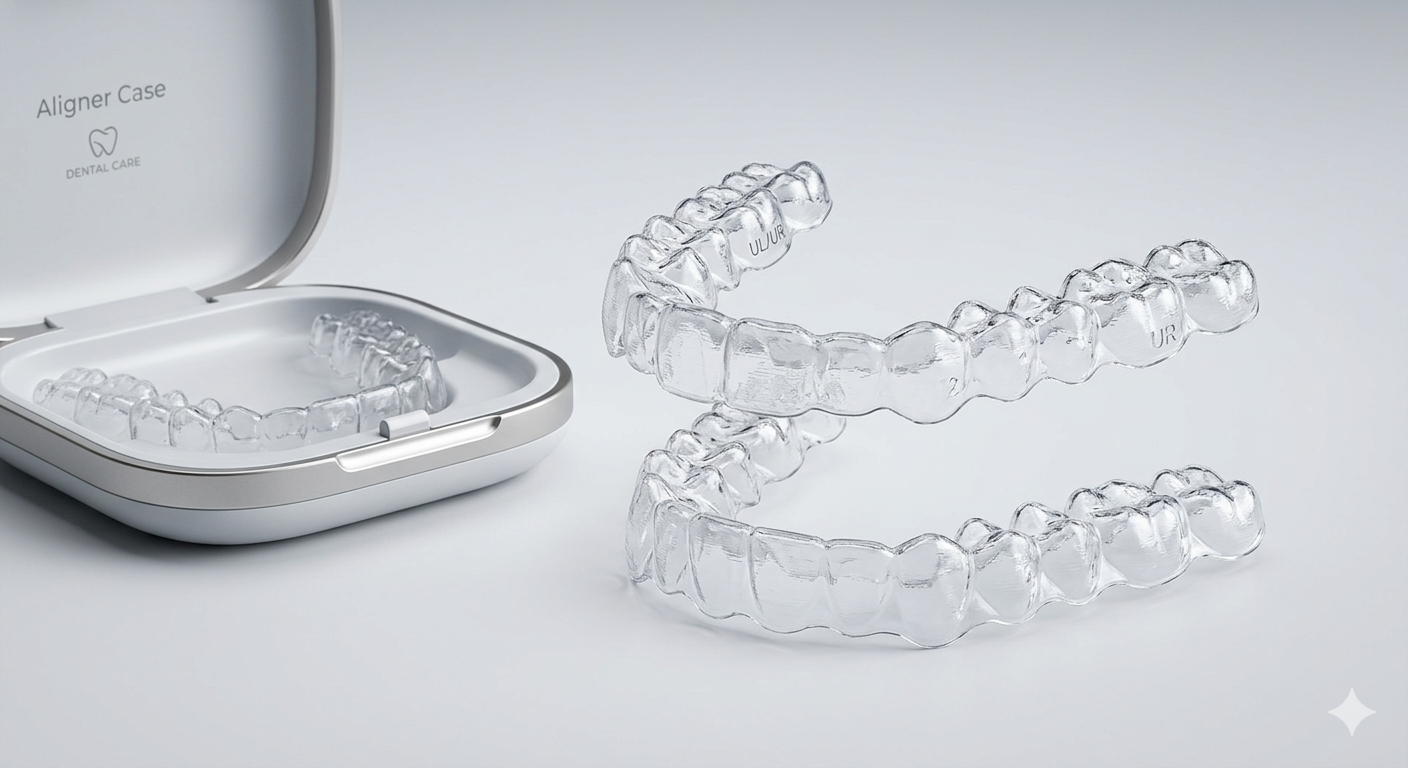
Discreet, Comfortable Tooth Straightening
Clear aligners are a popular, nearly invisible alternative to fixed braces for many orthodontic issues. Using a series of custom, removable trays, clear aligner therapy gently moves teeth into the desired position with predictable, digitally planned steps.
How clear aligners work
- Assessment & scan: We take a clinical exam and digital scan or impressions to map your current tooth positions.
- Digital treatment plan: A phased plan is created showing each movement stage and estimated treatment time.
- Custom aligners: A sequence of clear trays is fabricated; you wear each tray for about 1–2 weeks as instructed.
- Monitoring: Regular reviews ensure progress and adjustments if needed until the final alignment is achieved.
Benefits of clear aligners
- Nearly invisible while in use — ideal for adults and image‑conscious patients.
- Removable for eating, brushing and special occasions, improving oral hygiene compared with fixed appliances.
- Comfortable, with fewer emergency visits for broken wires or loose brackets.
- Digital planning provides a clear visualisation of the expected outcome.
Are clear aligners right for me?
Many mild to moderate alignment and spacing cases are suitable for aligners. Complex skeletal problems, severe rotations or very large tooth movements may still require braces or combined orthodontic approaches. We assess tooth movement needs, bite relationships and patient compliance before recommending aligner therapy.
Wear & compliance
Optimal results require wearing aligners for 20–22 hours per day, removing them only for eating and cleaning. Inconsistent wear prolongs treatment and may compromise outcomes.
Cleaning & hygiene
Rinse aligners daily and use a soft brush or recommended cleaner. Maintain excellent brushing and flossing to avoid staining and to keep attachments clean.
Treatment timeline & typical cases
Treatment duration varies — many patients complete care in 6–18 months depending on complexity. Clear aligners are commonly used for crowding, spacing, mild bite corrections and relapse cases after previous orthodontics.
Clear aligners vs braces
- Visibility: Aligners are discreet; braces are fixed and more noticeable.
- Hygiene: Aligners are removable, making cleaning easier.
- Control: Braces can be preferable for complex movements; aligners are excellent for many common corrections.
Costs, planning & preparation
Costs depend on case complexity and the number of aligner stages. We provide a detailed treatment plan, timeline and written cost estimate at your consultation. Preparatory work (fillings, extractions) may be recommended before starting.
Frequently asked questions
- Will aligners affect speech?
- Some patients notice a short adaptation period; most speech returns to normal within days.
- Can I eat with aligners in?
- No — remove aligners for eating and drinking anything other than water to avoid damage and staining.
- What if I lose an aligner?
- Contact us promptly — we may advise moving to the next tray or providing a replacement to keep treatment on track.